Evidence-Based Health & Nutrition Strategies
Certificate Program in Nutrition Strategies for Lifelong Health and Wellness
 Application closes on
10th Sep 2026
Application closes on
10th Sep 2026
 Speak with our expert
+19196363068
Speak with our expert
+19196363068




Learn more about the course
Get details on syllabus, projects, tools, and more

Certificate Program in Nutrition Strategies for Lifelong Health and Wellness
Application closes 10th Sep 2026
-

Unique Curriculum
Rigorous, evidence-based curriculum addressing critical areas of nutrient science, gut health, personalized nutrition across the lifespan, and chronic disease management
-
World-Renowned Faculty
Gain insights from distinguished Duke faculty through recorded lectures and live masterclasses, and live mentorship sessions by global health and wellness industry experts


Program Outcomes
Turn Science into Daily Nutrition Habits
Make informed decisions with evidence-based, practical nutrition frameworks.
-
Design effective meal plans and microbiome-informed dietary recommendations to meet energy and nutrient needs
-
Formulate diet interventions to optimize body systems and manage chronic conditions
-
Assess nutrition needs across the lifespan and adapt strategies for healthy aging
-
Understand GLP-1 therapy and integrate sustainable, science-backed nutrition principles
The Duke University School of Medicine Advantage
-
#5 in Executive MBA
US News 2025
-
#2 Best Colleges for Public Health in USA
Niche College Rankings 2024
-
#7 in Medicine
BRIMR Ranking 2023
-
#3 in Biomedical
US News 2024


Key program highlights
Why choose this program
-
Live Faculty-Led Masterclasses
Participate in live sessions conducted by Duke faculty and distinguished guest experts, offering evidence-based strategies in nutrition, health, and wellness
-
Live Mentored Learning Sessions
Engage in mentor-led sessions where industry experts present real-world cases, research-backed frameworks, and actionable tools for measurable results
-
Hands-On Learning
Through real-world case studies, research-backed frameworks, and practical tools that translate concepts into actionable strategies
-
Science-Backed Curriculum
Learn from a comprehensive curriculum covering nutrient science, energy balance, gut health, chronic disease prevention, microbiome support, and GLP-1 therapies
-
Learning Support
Get personalized assistance from a dedicated Program Manager, academic support through the Great Learning community, project discussion forums, and peer groups
-
Earn Recognized Credentials
Upon program completion, earn a globally recognized Certificate of Completion and Digital Badge from Duke University School of Medicine


Skills you will learn
Evidence-Based Nutrition
Personalized Nutrition Plans
Chronic Disease Management
GLP-1 Therapy Integration
Nutrient Science Fundamentals
Energy Balance Strategies
Gut Health Optimization
Microbiome Support Techniques
Evidence-Based Nutrition
Personalized Nutrition Plans
Chronic Disease Management
GLP-1 Therapy Integration
Nutrient Science Fundamentals
Energy Balance Strategies
Gut Health Optimization
Microbiome Support Techniques
view more
- Overview
- Learning Journey
- Curriculum
- Projects
- Certificate
- Faculty
- Fees
This program is ideal for
Evidence-based, practical nutrition frameworks for professionals and enthusiasts in everyday life
-
Nutrition and Health Professionals
Looking to learn about nutrition’s role in health and wellness, with an evidence-based approach to making informed decisions
-
Individuals and Fitness Professionals
Exploring holistic strategies to help clients build a sustainable, healthy lifestyle or improve individual and family health
-
Healthcare Professionals
Including non-clinical roles needing actionable nutrition frameworks for patient-centric strategies and enhanced health outcomes
-
Entrepreneurs and Product Owners
Who want to combine science-backed nutrition expertise with innovative ideas to build and grow health-centric businesses
Experience a unique learning journey
Our pedagogy is designed to ensure a holistic learning experience
-
Learn from world-renowned faculty
Learn critical concepts through live masterclasses and recorded video lectures by Duke faculty
-
Engage with your mentors
Clarify your doubts and gain practical skills during weekly live sessions with industry experts
-
Work on hands-on projects
Work on projects to apply the concepts & tools learnt in the module
-
Get personalized assistance
Our dedicated program managers will support you through your learning journey




Comprehensive Curriculum
Designed by Duke faculty and delivered by top professors and practicing experts in nutrition and wellness, the curriculum for the Nutrition Certificate Course covers nutrient science, energy balance, and gut health throughout the lifespan. Advanced modules explore chronic disease prevention, microbiome support, and emerging therapies like GLP-1.
-
8 Live Sessions
With industry mentors
-
Monthly
Live Masterclasses
-
Advanced Module
On emerging therapies
MODULE 1: FOUNDATIONS OF NUTRITION & GUT HEALTH
In this module, learners are introduced to foundational nutrient science, energy balance, and gut physiology and are equipped with science-based frameworks to design balanced menus and implement microbiome-supportive strategies for digestive comfort and overall well-being.
WEEK 01: FOUNDATIONS OF NUTRIENT SCIENCE & ENERGY BALANCE
WEEK 02: MICRONUTRIENTS, DRI'S & MENU PLANNING
WEEK 03: GUT HEALTH: INTESTINAL ABSORPTION AND BARRIER FUNCTION
WEEK 04: FEEDING THE GUT MICROBIOME
WEEK 05: LEARNING BREAK
MODULE 2: APPLIED NUTRITION ACROSS LIFESPAN, DISEASES, AND WEIGHT MANAGEMENT
In this module, learners will be equipped to tailor nutrition across life stages and build evidence-based plans to address obesity and cardiometabolic risks using food-first approaches. They will also be introduced to GLP-1 mechanisms, pharmacotherapy for weight management, and sustainable, low-waste eating practices.
WEEK 06: NUTRITION ACROSS THE LIFE SPAN
WEEK 07: CHRONIC DISEASES AND WEIGHT MANAGEMENT
WEEK 08: GLP-1 AND PHARMACOTHERAPY FOR WEIGHT MANAGEMENT
WEEK 09: SUSTAINABLE & ETHICAL NUTRITION
Note: The curriculum listed above are indicative and subject to updates as technology evolves.
Work on hands-on projects and case studies
Engage in hands-on projects and real-world case studies using emerging tools across sectors

Nutrition & Gut Health
GUT-HEALTH IMPROVEMENT TRACKER
Description
Design a 30-day personal health plan incorporating prebiotic, probiotic, and high-fiber foods. Collect baseline and follow-up data on digestive comfort, mood, and inflammation markers. Analyze changes, summarize findings in a report, and provide recommendations for maintaining microbiome diversity.

Chronic Disease Management
PLANNING, SYMPTOM TRACKING, EVIDENCE-BASED RECOMMENDATIONS
Description
Select a prevalent condition (e.g., obesity or hypertension) and develop a research-backed dietary intervention. Outline nutrient targets, sample menus, behavior-change strategies, monitoring areas, measurable outcomes, and potential risks. Propose integration with existing medical care for clinicians or community health programs.
Note: The projects listed above are indicative and subject to updates to the curriculum.
Certificate of Completion and Digital Badge from Duke University School of Medicine
Earn a globally recognized credential from a top U.S. university and showcase it to your network
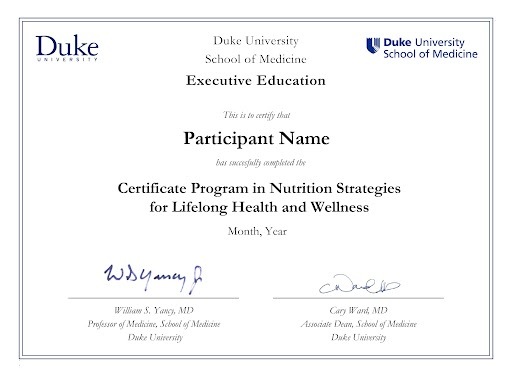
* Image for illustration only. Certificate subject to change.
Meet your faculty
Learn from renowned experts at Duke University
-
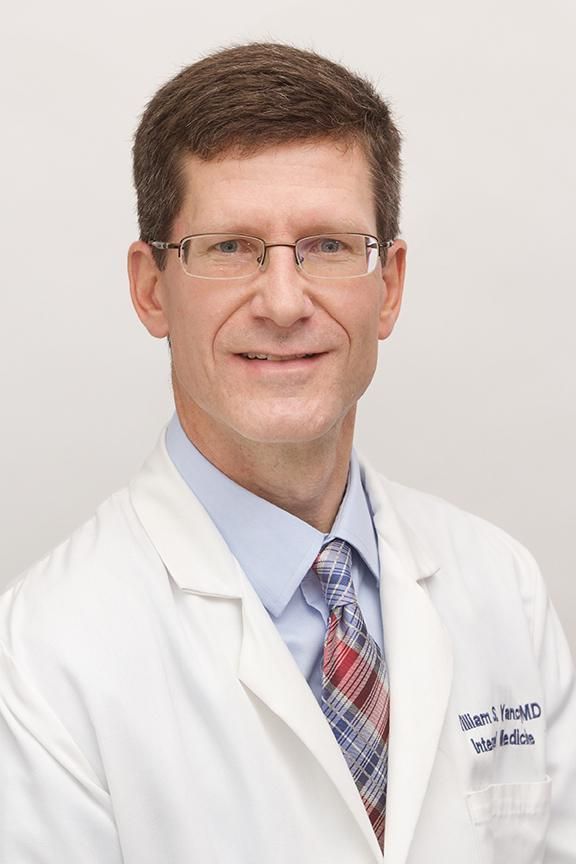
Dr. William Yancy
Professor of Medicine, Duke University School of Medicine
Director, Duke Diet and Fitness Center; Expert in Obesity Medicine and Research
Fellow of The Obesity Society, Board of Obesity Medicine Diplomate
Know More -
Dr. Michelle Ponder
Assistant Professor, Medicine - Endocrinology & Metabolism
Board-certified in Obesity Medicine, specializing in obesity care
Member of the Cardiometabolic Prevention Clinic at Duke
Know More -
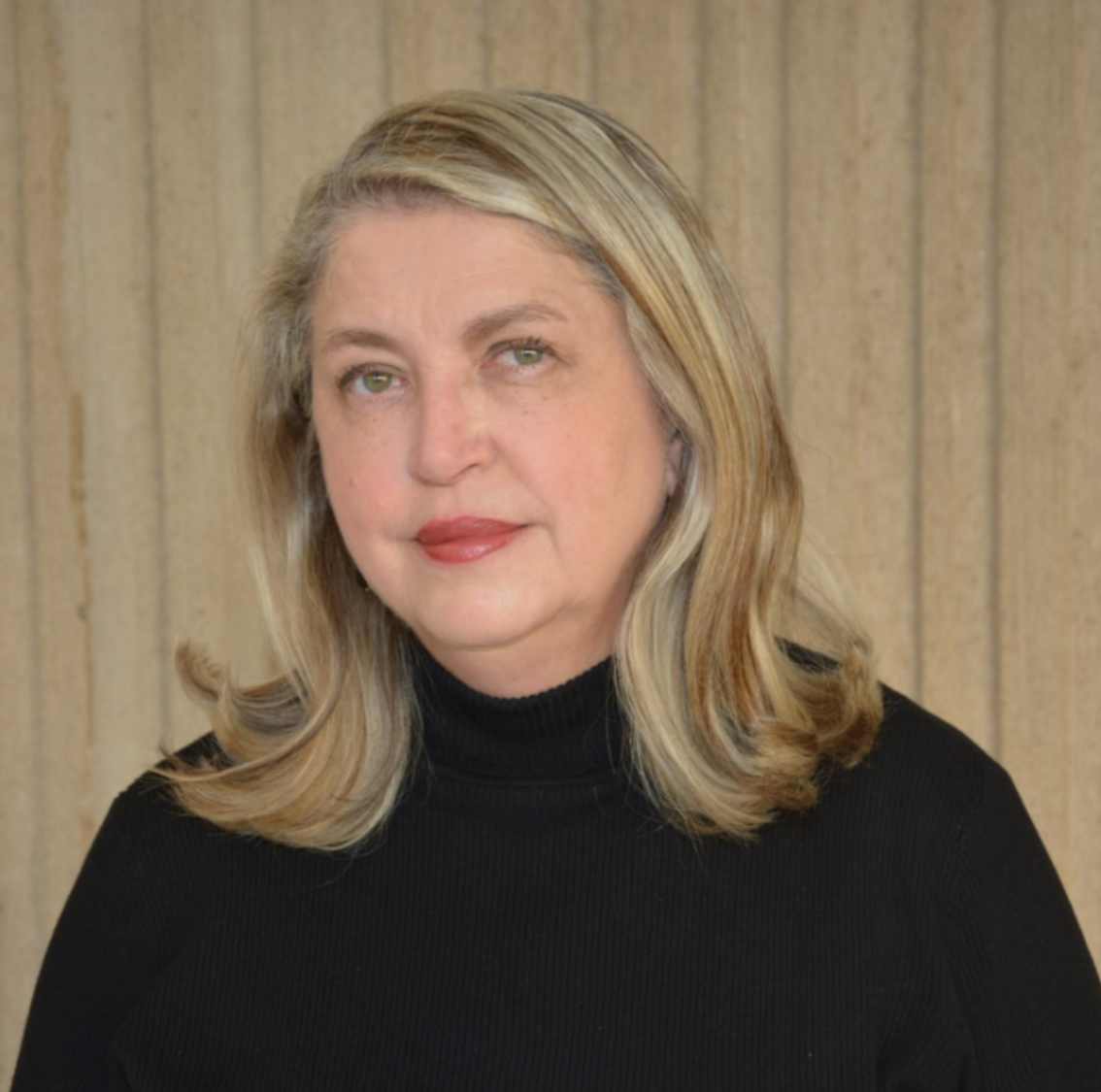
Elisabetta Politi
MPH, RD, LDN, CDCES, NBC-HWC, Clinical Dietitian
Certified Diabetes Care and Education Specialist
National Board-Certified Health & Wellness Coach
Know More -
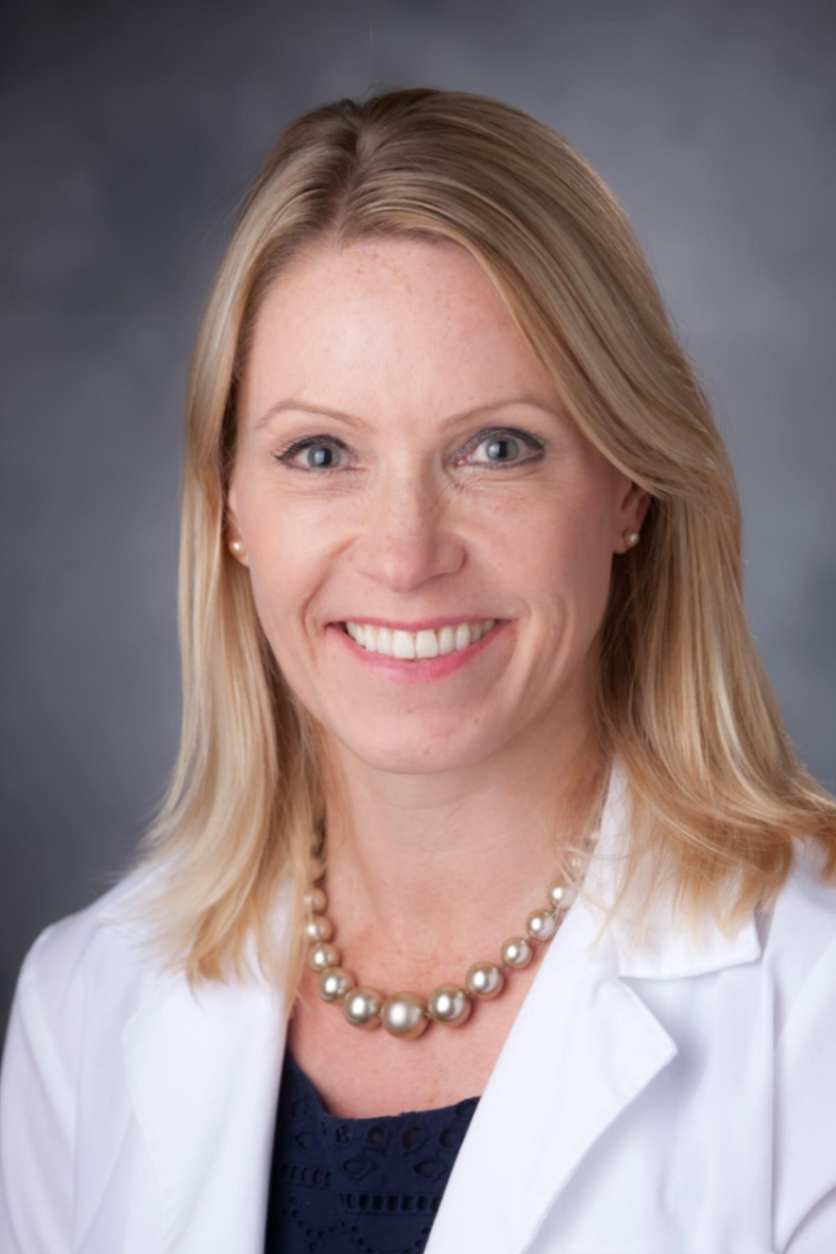
Dr. Nitya Kumar
MD, ABOM
Assistant Professor of Medicine, Endocrinology, Metabolism, and Nutrition (2021)
Board-certified endocrinologist specializing in obesity medicine
Know More -
Dr. Paul Edmund Wischmeyer
Professor of Anesthesiology, Department of Surgery
Director of TPN/Nutrition Team, Duke
Specializes in critical care, perioperative nutrition & recovery
Know More -
Dr. Diego V. Bohorquez
Associate Professor of Medicine, Gastroenterology
Pioneer in gut-brain biology
Research, published in Nature Journal, on host-microbe effects on appetite, mood
Know More -
Steph Bryant
Clinical Research Coordinator, Department of Pediatrics
MPH, RD, LDN
Former Dietitian at Duke Healthy Lifestyles
Know More -
Christopher B. Newgard
Professor of Nutrition, Duke School of Medicine
Professor of Pharmacology and Cancer Biology, Professor in Medicine
Director, Sarah W. Stedman Nutrition and Metabolism Center
Know More -
Sofia Rydin-Gray
Assoc. Prof. of Psychiatry & Behavioral Sciences, DUSM
Division Director of Adult Psychiatry and Psychology
PhD in Clinical Psychology
Know More -
Connie Watkins Bales
Prof. Emeritus in Medicine, Duke University Medical Center
Senior Fellow in the Center for the Study of Aging and Human Development
Ph.D., University of Tennessee, Knoxville
Know More


 (2) (1).jpg "Dr. Nitya Kumar")
.jpg "Dr. Paul Edmund Wischmeyer")
.jpg "Dr. Diego V. Bohorquez")

 LinkedIn Profile
 University Link
Course Fees
The course fee is USD 2,700
Invest in your career
-
Design effective meal plans and microbiome-informed dietary recommendations to meet energy and nutrient needs.
-
Formulate diet interventions to optimize body systems and manage chronic conditions.
-
Assess nutrition needs across the lifespan and adapt strategies for healthy aging.
-
Understand GLP-1 therapy and integrate sustainable, science-backed nutrition principles.


Admission process
Conducted on a rolling basis and will be closed once the requisite number of candidates are enrolled
-
Submit Application
Candidates can apply to the program online
-
Review
Eligible applications will be reviewed by a panel from Great Learning
-
Join the Program
An offer letter will be sent to the selected candidates


Course Eligibility
- Ideal for professionals in nutrition, health, wellness, fitness, and healthcare seeking evidence-based frameworks to understand the role of nutrition in health and well-being.
- The program is also relevant for those aiming to apply nutrition knowledge to enhance decision-making, drive health outcomes, and support innovation in personal, clinical, or business settings.
Cohort start date
-
Online · To be announced
Admissions Open
 Application Closes
10th Sep 2026
Application Closes
10th Sep 2026